
Coffee Brake: Heavy Metal
 Today’s Coffee Brake topic comes from Michael B who writes: After watching this video on Chris Runge’s Frankfurt Flyer I became interested in metal fabrication. I’ve always been partial to the metalwork on older Porsches like the 904 and 917 m’self. My assumption is that most early cars were hand-hammered around
wooden forms, though I’ve not researched this at all. Just a long-held
assumption. Which connects to why the older cars are so fascinating to
me — the idea that human hands and simple tools created such wonderful
shapes.
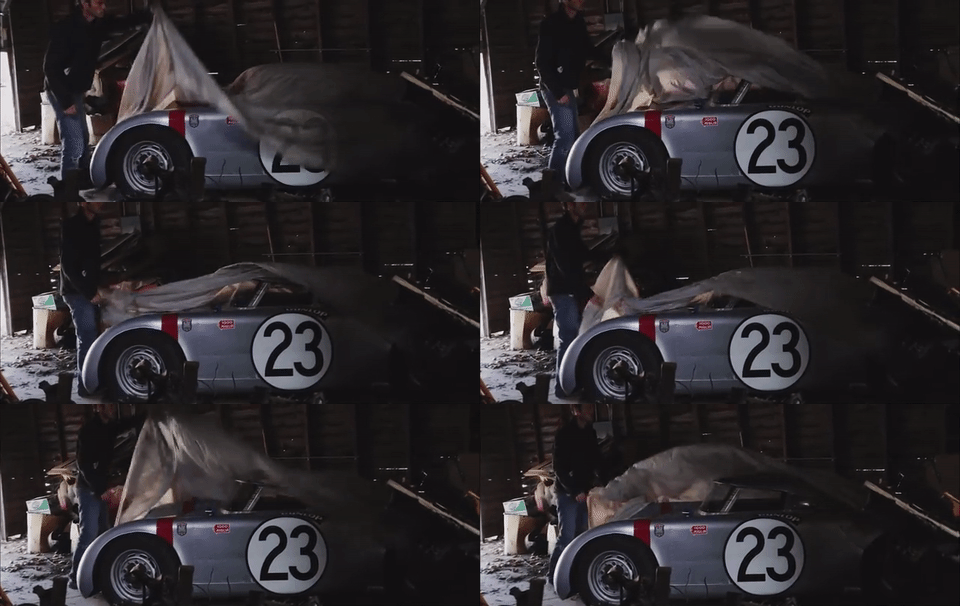
I’m curious what metalwork speaks to other DT readers and why.
DT Editor Vince: Personally I’ve been drawn by the allure of doing my own metal fabrication — of course it will have to wait until the kids are older and I’ve got more spare time, but I can imagine enjoying building some fender flares for a Mercury Capri rally beast– but I’d probably spend so much time on building my own DIY tools (shrinker/stretcher) that by the time I got to making the pieces I’d probably want to take a break and go inside and watch holographic cat videos…the future is going to be awesome. Anyway, enjoy this video about Chris Runge’s Frankfurt Flyer.
Any metal fabricators out there in the audience?
i had some fairly complex parts cast in aluminum a few years ago – this was right about when CNC was completing its takeover of major aspects of the design process, and i was lucky enough to work with what must have been one of the last best craftsmen doing hand-built wooden molds – i had done the drawings in what was available to me at the time, which was adobe illustrator, but they were sharp and well thought out – the limitation was not being able to see things in 3D except in pencil sketches and my own imagination – to see those come to life in wood and bondo negatives, and then out of the sand as fresh aluminum parts ready for machining, and then for everything to fit together exactly as i had envisioned, well it was quite a thrill
one key thing i learned was to trust people who clearly know their craft (which i have extended to include dentists, accountants, etc.) – engineering is one thing, but the knowledge gained through actually building things (optical systems, molars, tax returns) has a depth and holistic integrity that is not replaceable – computer design and 3D printing gives us the ability to iterate at low cost, but in the transition an incredible amount of skill will be lost
i do software stuff now, but i am always on the lookout for ideas that can give me an excuse to get into a shop again, whether metal, wood, or anything solid really – mostly that impulse ends up getting vented in the kitchen making pizza or something
or badges and logos, right? ;)
Michael B: Please reconsider your remarks about being "partial to the metalwork on older Porsches like the 904 and 917 m'self." The only metal on either car was the frame and the mechanical running gear, but certainly not the body. From day one, both of those cars have ALWAYS worn fiberglass bodywork.
Well there you have it. I feel like I saw photos of prototype forms for the 911 in a book years back and when I watched Runge's video I erroneously connected the dots. I've never had the pleasure of seeing most of these cars in person so I'll pay closer attention to info I happen across in the future. Thanks for helping a neophyte out!
I've had a bunch of unobtanium interior parts 3D printed for my 240Z. Not metalwork… not casting… but "fabrication" nonetheless?